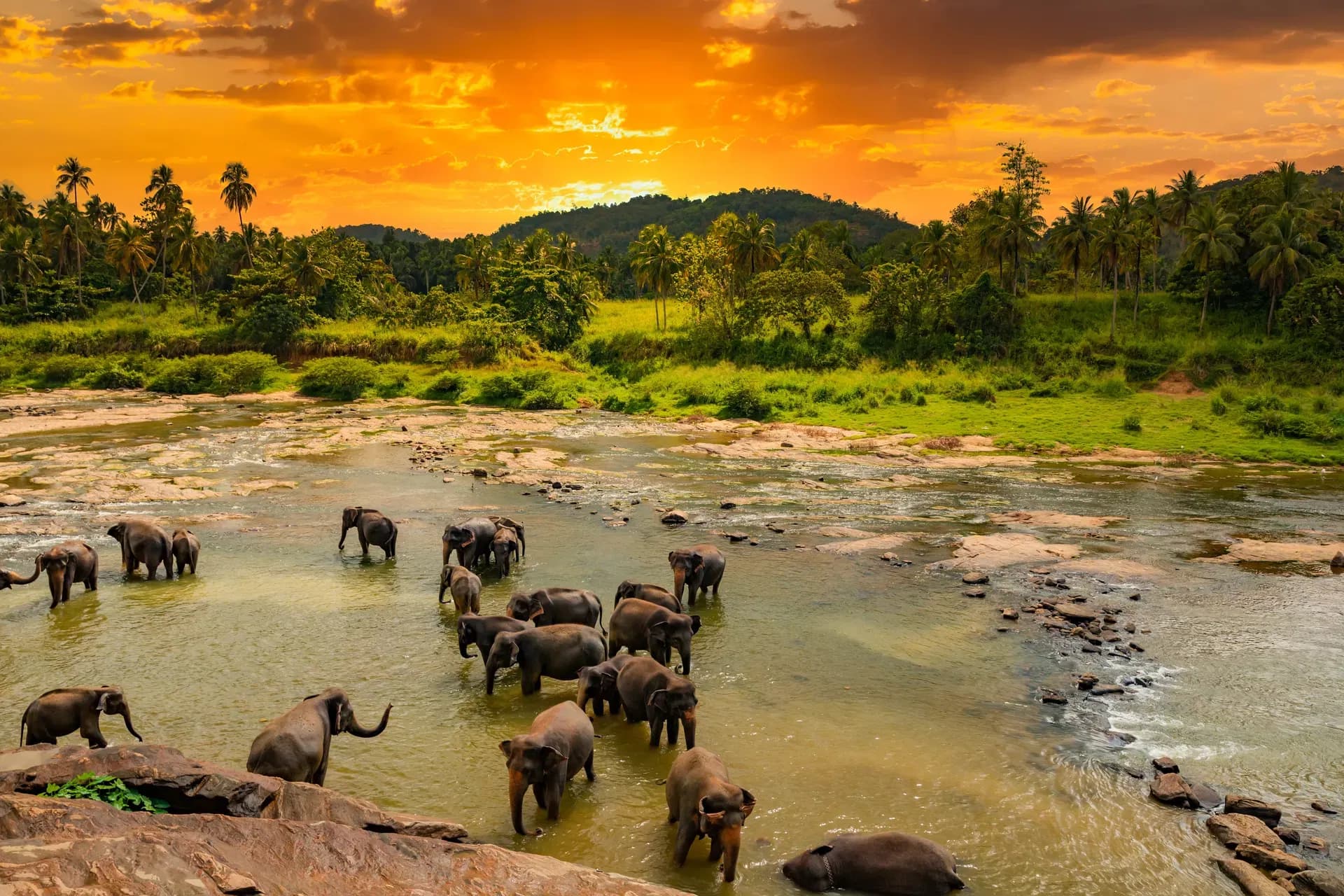
Sri Lanka is home to the highest density of Asian elephants in the world, with an estimated population of 6,000 to 7,000 wild individuals. These magnificent creatures hold a deeply revered place in Sri Lankan culture, featuring prominently in Buddhist traditions, temple ceremonies, and national identity.
Udawalawe National Park is the premier destination for elephant watching. Located in the south-central lowlands, the park's open grasslands and reservoir shores provide ideal viewing conditions. Herds of 50 or more elephants are regularly spotted grazing, bathing, and socialising — making it one of the most reliable elephant-viewing locations in all of Asia.
The nearby Elephant Transit Home (ETH), run by the Department of Wildlife Conservation, rehabilitates orphaned elephant calves with the goal of returning them to the wild. Unlike the more commercialised Pinnawala Elephant Orphanage, the ETH maintains minimal human contact to prepare calves for wild release. Feeding times offer a unique viewing opportunity.
Between July and October, Minneriya National Park hosts 'The Gathering' — one of the largest wild elephant congregations in the world. As the dry season causes surrounding water sources to shrink, hundreds of elephants converge on the Minneriya reservoir, creating a spectacle that National Geographic has listed among the greatest wildlife shows on earth.
Kaudulla and Hurulu Eco Parks serve as overflow gathering sites, often hosting significant herds when Minneriya reaches capacity. Your safari guide will know which park to visit based on current conditions.
In the coastal and lowland areas, wild elephants can occasionally be spotted at Bundala, Lunugamvehera, and even crossing roads in rural areas of the southern and eastern provinces. Always maintain a respectful distance and never feed wild elephants.
Ethical elephant tourism is essential. We strongly recommend avoiding any facility that offers elephant riding, chaining, or unnatural performances. The best way to appreciate these incredible animals is from a respectful distance in their natural habitat, where they're free to roam and behave naturally.
For the best elephant safari experience, plan an early morning or late afternoon game drive when elephants are most active. A knowledgeable guide who understands elephant behaviour will significantly enhance your experience and ensure responsible viewing practices.