Sri Lanka's cultural heritage stretches back over 2,500 years, making it home to some of the oldest continuously inhabited cities in the world. The island's 'Cultural Triangle' — connecting Anuradhapura, Polonnaruwa, and Kandy — contains an extraordinary concentration of archaeological and spiritual treasures.
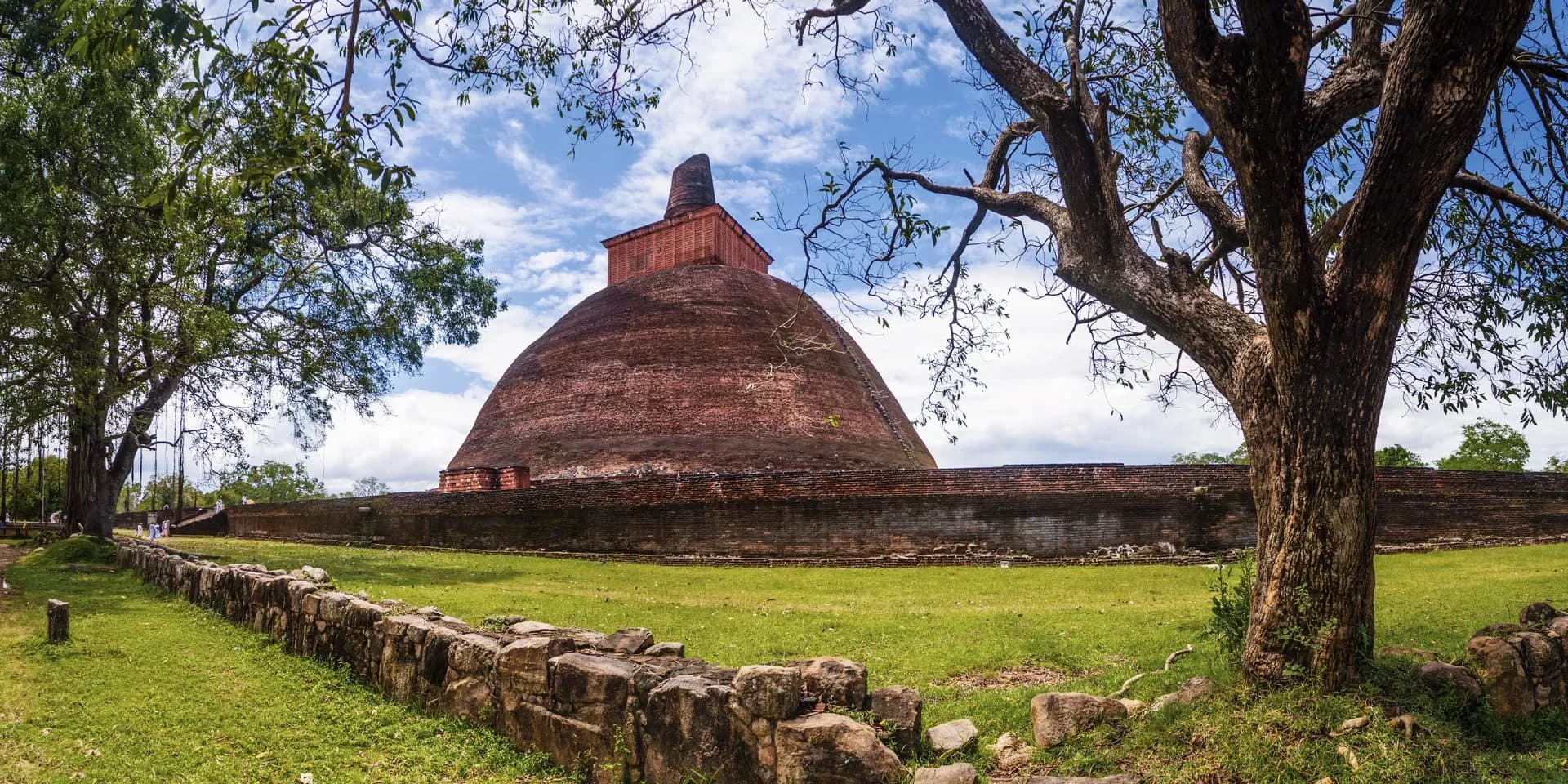
Anuradhapura, Sri Lanka's first great capital, flourished for over a millennium from the 4th century BCE. Today, its vast ruins include the Jetavanaramaya — once one of the tallest structures in the ancient world — and the Sri Maha Bodhi, grown from a cutting of the original tree under which the Buddha attained enlightenment. It's the oldest documented tree in human history.
Polonnaruwa, the medieval capital, showcases a different era of Sinhalese artistry. The Gal Vihara, with its four magnificent Buddha statues carved from a single granite wall, is considered the pinnacle of Sinhalese rock sculpture. The beautifully preserved Parakramabahu's Royal Palace and the circular Vatadage are testaments to sophisticated 12th-century architecture.
The Dambulla Cave Temple, perched atop a massive rock outcrop, contains 153 Buddha statues and intricate ceiling paintings spanning over 2,000 square metres. Dating back to the 1st century BCE, it remains an active place of worship, adding a living dimension to the historical experience.
Kandy's Temple of the Sacred Tooth Relic (Sri Dalada Maligawa) houses Sri Lanka's most sacred Buddhist artifact — a tooth of the Buddha. The ornate temple complex, set beside a serene lake, is the centrepiece of the annual Esala Perahera festival.
Beyond the Cultural Triangle, Mihintale is revered as the birthplace of Buddhism in Sri Lanka, where the Indian monk Mahinda converted King Devanampiyatissa in 247 BCE. The climb to the summit passes ancient hospitals, refectories, and meditation caves.
The southern city of Galle showcases a different chapter — its Dutch Fort, built in the 17th century, is the best-preserved European fortress in Asia. Within its walls, colonial architecture has been repurposed into boutique hotels, art galleries, and atmospheric restaurants.
Visiting these sites is more than a historical excercise — it's a journey through living traditions that continue to shape Sri Lankan identity and spirituality today.